Research-use-only context. This article explains the published biology of sleep and cellular repair and summarizes third-party scientific literature. It is not medical advice, not a sleep or health protocol, and not a treatment, therapeutic, or product claim. American Peptides products are sold strictly for in vitro laboratory research and are not for human or veterinary use.
Humans spend roughly a third of the lifespan asleep, and sleep has often been pictured as the body simply switching off. The research literature describes the opposite: sleep is the period when much of the body’s repair machinery switches on. This article does not offer a sleep protocol or a supplement. It summarizes the biology as the literature describes it — what happens across a night of sleep, why sleep sits at the center of recovery and cellular renewal in published models, what studies report when sleep is experimentally shortened, and what directions recovery research is exploring in the laboratory.
Sleep is an active repair process
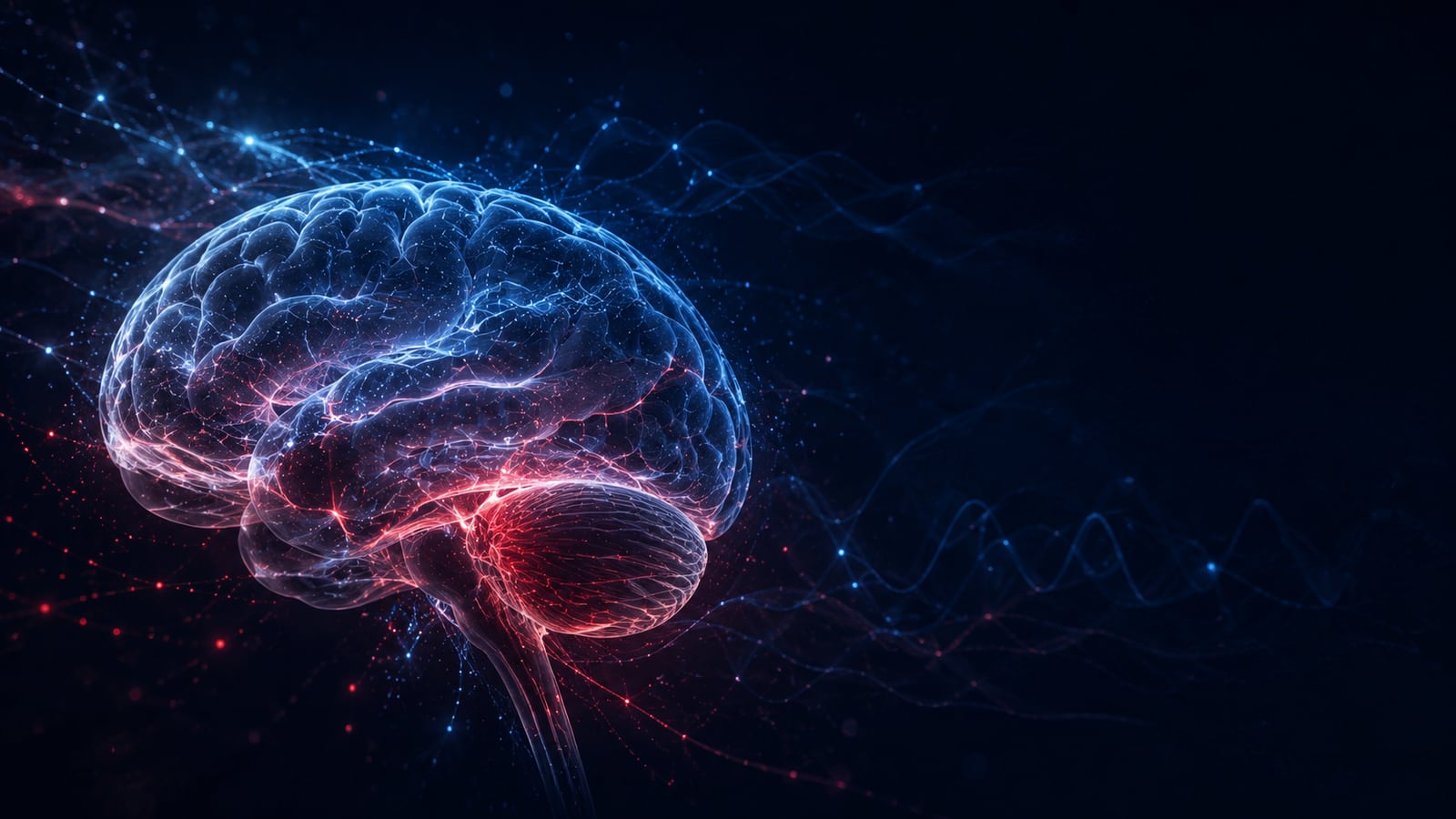
Sleep is not one uniform state. Across a night it cycles several times between non-REM stages — including the deep, slow-brain-wave phase called slow-wave sleep — and REM sleep. Far from idle, the sleeping brain is busy. A landmark 2013 study in Science reported that the brain’s glymphatic system — a network that clears cellular waste — becomes markedly more active during sleep, driving clearance of metabolites from the adult brain [1]. Sleep scientists frame the broader purpose of sleep in terms of cellular and synaptic homeostasis: a nightly rebalancing of the connections and resources the waking brain runs down [2]. Downtime, in the literature’s framing, is maintenance time.
The anabolic night shift
The repair story extends well below the neck. One of the most reliable findings in human endocrinology is that a large share of the body’s daily growth hormone is released in pulses tied to deep, slow-wave sleep [3]. Growth hormone is a central signal in the body’s building-and-repair (anabolic) programs — a major reason sleep and physical recovery are so tightly coupled in the physiological literature. Those signals, growth hormone among many, are chemical messengers, and a great number of the body’s messengers are peptides. (For the fundamentals, see what research peptides are and how signaling peptides work.)
Repair runs on a clock
None of this timing is random — it is governed by the circadian clock, the roughly-24-hour timer built into nearly every cell. Research ties that clock directly to cellular energy and repair: a 2013 Science study reported that the circadian clock drives a daily cycle of NAD+ — a coenzyme central to metabolism and cellular maintenance — which in turn paces mitochondrial oxidative metabolism [4]. When clock and sleep are aligned, published models describe the machinery of cellular repair running on schedule. (See the explainers on mitochondrial health and NAD+.)
What studies report when sleep is shortened
Because so much repair activity is timed to sleep, experimental sleep restriction is associated with measurable biological changes in the study literature. Human studies link sleep deprivation to increased markers of inflammation: a 2026 meta-analysis of experimental sleep-deprivation studies reported effects on peripheral inflammatory markers [5], and earlier work described sleep loss activating cellular inflammatory signaling [6]. Elevated inflammatory signaling is the same theme that runs through tissue-wear biology — see the explainer on inflammation biomarkers. Shortened sleep, in the literature’s framing, leaves the biological repair ledger unbalanced.
Recovery as a measurable variable
All of this is why modern research increasingly treats recovery not as a vague feeling but as a quantifiable physiological variable. That shift is covered in the science of recovery as a measured variable and why recovery is becoming a performance metric, and the specific sleep-and-repair link in what the research says about sleep and cellular repair.
What recovery research is exploring
Given how central signaling is to sleep-linked repair, several signaling peptides have been studied in related laboratory contexts. The honest framing, as always: this work is overwhelmingly preclinical — cultured cells and animal models — and does not establish outcomes in people. Two examples from the literature:
- Ipamorelin — characterized in the literature as a selective growth-hormone secretagogue, studied for how it engages the same growth-hormone axis that deep sleep naturally drives. The actual evidence, and its limits, is reviewed in ipamorelin research: what the studies show.
- MOTS-c — a mitochondrial-derived peptide studied in metabolism research and, increasingly, in the context of circadian and exercise biology. See MOTS-c research: what the studies show.
The pattern mirrors the rest of the field: mechanistically interesting, still preclinical, and not approved for these uses — and growth-hormone secretagogues are prohibited in competitive sport. The relevance of this literature is descriptive: it maps where the science currently stands.
Reading the research responsibly
Two rules keep this reading honest. First, preclinical is not proof — an animal result is a reason for more study, not a human conclusion. Second, the label matters: the compounds referenced here are sold strictly for laboratory research (see what “research use only” actually means), and evaluating any research compound starts with a Certificate of Analysis. Researchers surveying the recovery and cellular-repair literature can browse the compounds referenced above in the bioregulator research catalog, and the full plain-language library lives in the research education hub.
Frequently Asked Questions
What role does sleep play in recovery, according to the research literature?
The literature describes sleep as an active repair window: the brain’s glymphatic system clears cellular waste, a large share of daily growth hormone is released during slow-wave sleep, and cellular repair is timed by the circadian clock. This is a description of published biology, not medical advice.
What repair processes does the literature associate with sleep?
Studies point to brain waste clearance and synaptic rebalancing, body-wide anabolic signaling tied to growth-hormone release, and circadian-timed energy-pathway and mitochondrial maintenance.
What is the reported relationship between sleep loss and inflammation?
Human studies link experimental sleep deprivation to increased inflammatory markers; a 2026 meta-analysis reported effects on peripheral inflammation. The relationship is well documented in the research literature.
What does the research literature say about peptides studied in sleep and recovery biology?
Some signaling peptides — such as ipamorelin (a growth-hormone secretagogue) and MOTS-c (a mitochondrial-derived peptide) — have been studied in preclinical models related to the growth-hormone axis and mitochondrial or circadian biology. The evidence is largely animal- and cell-based, and none is an approved therapy for these uses. See the linked study reviews.
Citations
- Xie L, et al. “Sleep drives metabolite clearance from the adult brain.” Science. 2013;342(6156):373–377. PubMed: PMID 24136970
- Tononi G, Cirelli C. “Sleep and the price of plasticity: from synaptic and cellular homeostasis to memory consolidation and integration.” Neuron. 2014. PubMed: PMID 24411729
- “Physiology of growth hormone secretion during sleep.” J Pediatr. 1996. PubMed: PMID 8627466
- Peek CB, et al. “Circadian clock NAD+ cycle drives mitochondrial oxidative metabolism in mice.” Science. 2013. PubMed: PMID 24051248
- “Effects of Experimental Sleep Deprivation on Peripheral Inflammation: An Updated Meta-Analysis of Human Studies.” J Sleep Res. 2026. PubMed: PMID 40474574
- “Sleep deprivation and divergent toll-like receptor-4 activation of cellular inflammation in aging.” Sleep. 2015. PubMed: PMID 25325509
Related reading: For the biology of focus, memory, and mental clarity behind this research — and how it all connects — see The Biology of Focus, Memory, and Mental Clarity.
Related reading: For the biology of aging that ties this research together — the hallmarks, NAD+, senescence, and healthspan — see The Biology of Cellular Aging: Research Pathways.
This article is for laboratory research reference only. American Peptides products are sold strictly for in vitro research. Not for human consumption.
Related research
Compliance Notice: American Peptides products are sold strictly for laboratory and academic research purposes only. They are not intended for human or veterinary consumption, diagnosis, treatment, or prevention of any disease. All content on this page is educational in nature and does not constitute medical advice or product claims. Researchers are responsible for handling these compounds in accordance with their institution’s safety protocols and applicable laws.