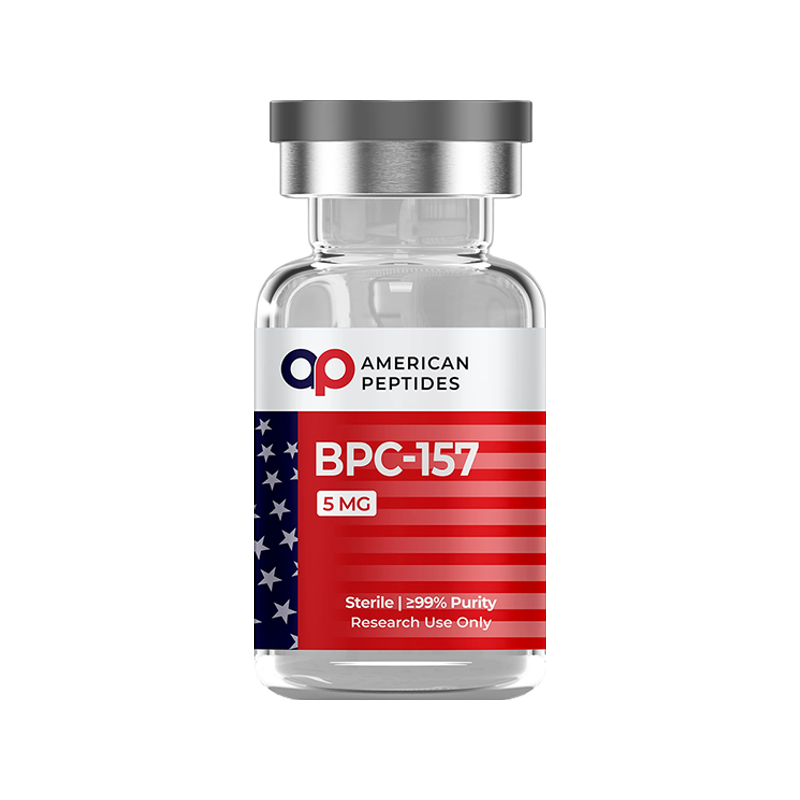
Research-use-only context. This article summarizes published third-party scientific literature — the large majority of it conducted in cultured cells or animal models. It is not medical advice, not a therapeutic or performance claim, and not a usage guide. American Peptides products are sold strictly for in vitro laboratory research and are not for human or veterinary use.
Among research peptides, BPC-157 has one of the largest and most-cited experimental literatures. That sheer volume is often mistaken for certainty. This summary surveys what the peer-reviewed studies actually report, how much of that work is preclinical versus human, and where the evidence still thins out — the context a researcher needs before reading any single headline result. For the receptor pathways and signaling cascades themselves, see our companion BPC-157 mechanism of action summary.
How much research actually exists
The BPC-157 literature is genuinely large for a research peptide. A 2025 systematic review in the HSS Journal searched PubMed, Cochrane, and Embase and identified 544 articles published between 1993 and 2024. After screening, 36 studies met the inclusion criteria — and of those, 35 were preclinical and only one was clinical. That ratio is the single most important fact about the field: the evidence base is deep, but it is almost entirely laboratory and animal work.
What the preclinical studies report
The preclinical picture is unusually consistent across independent research groups. A frequently cited 2011 study in the Journal of Applied Physiology examined tendon cells taken from rat Achilles tendons and reported that BPC-157 accelerated the outgrowth and migration of those cells and improved their survival under oxidative (hydrogen-peroxide) challenge, tracing the effect to the FAK–paxillin signaling pathway. A 2021 review in Frontiers in Pharmacology gathered the rodent wound-healing literature — incisional and excisional wounds, burns, and ulcers — and described recurring effects on blood-vessel behavior and on gene expression in wound tissue. More recent work maps the mechanisms in finer detail: a 2025 scoping review reports that across animal models BPC-157 engages angiogenesis-related pathways such as VEGFR2 and nitric-oxide signaling via the Akt–eNOS axis. Every one of these is a finding in cells or animals. They describe what researchers observed in those models, not outcomes in people.
The human-evidence gap
This is the part popular coverage tends to skip. The 2025 narrative review titled “Regeneration or Risk?”, published in Current Reviews in Musculoskeletal Medicine, is blunt about it: the authors found only three pilot human studies in the entire literature, and concluded that BPC-157 “should be considered investigational, and its use approached with caution.” The 2025 HSS Journal systematic review adds two further points of context — BPC-157 lacks United States Food and Drug Administration approval, and it is banned in professional sport. A deep preclinical column, in other words, sits next to a nearly empty human one.
What this means for a researcher
Read together, the literature describes a compound with a large, internally consistent body of cell and animal research and very little rigorous human data. The reviewers themselves frame that contrast not as a conclusion but as a call to action, repeatedly noting the “critical need for well-designed human trials.” For anyone surveying the field, holding both halves at once — the breadth of the preclinical signal and the thinness of the human evidence — is what separates reading the science from reading the marketing.
Frequently Asked Questions
How many human studies have been done on BPC-157?
Very few. A 2025 narrative review in Current Reviews in Musculoskeletal Medicine identified only three pilot human studies across the entire published literature, and characterized the compound as investigational pending larger, well-designed trials.
Is BPC-157 approved by the FDA?
No. Published 2025 reviews note that BPC-157 lacks U.S. Food and Drug Administration approval and remains investigational. It is a research compound, not an approved therapeutic, and American Peptides supplies it strictly for in vitro laboratory research.
Is most BPC-157 research done in animals?
Yes. A 2025 systematic review in the HSS Journal included 36 studies, of which 35 were preclinical (cell and animal models) and only one was clinical. Findings in those models describe the models, not outcomes in humans.
What signaling pathways do BPC-157 studies focus on?
The most frequently cited include VEGFR2 and angiogenesis, nitric-oxide synthesis via the Akt–eNOS axis, and growth-related signaling. Our BPC-157 mechanism of action summary breaks these down in detail.
Citations
- Chang C-H, Tsai W-C, Lin M-S, Hsu Y-H, Pang J-HS. “The promoting effect of pentadecapeptide BPC 157 on tendon healing involves tendon outgrowth, cell survival, and cell migration.” J Appl Physiol. 2011;110(3):774–780. PubMed: PMID 21030672
- Seiwerth S, et al. “Stable Gastric Pentadecapeptide BPC 157 and Wound Healing.” Front Pharmacol. 2021;12:627533. PubMed: PMID 34267654
- McGuire FP, Martinez R, Lenz A, Skinner L, Cushman DM. “Regeneration or Risk? A Narrative Review of BPC-157 for Musculoskeletal Healing.” Curr Rev Musculoskelet Med. 2025;18(12):611–619. PubMed: PMID 40789979
- Vasireddi N, et al. “Emerging Use of BPC-157 in Orthopaedic Sports Medicine: A Systematic Review.” HSS J. 2025 (online ahead of print). PubMed: PMID 40756949
Related reading: For the biology behind why joints and tendons ache — and how this peptide research fits into it — see Why Knees Ache: The Biology of Cartilage, Tendons, and Joint Wear.
This article is for laboratory research reference only. American Peptides products are sold strictly for in vitro research. Not for human consumption.
Related research
- TB-500 (Thymosin β4) Research: What the Studies Actually Show
- What Is BPC-157? A Complete Research-Use-Only Guide
- BPC-157 Mechanism of Action: A Research Summary of the Pathways Most Often Studied
- GHK-Cu (Copper Peptide) Research: What the Studies Actually Show
- Ipamorelin Research: What the Studies Actually Show
Compliance Notice: American Peptides products are sold strictly for laboratory and academic research purposes only. They are not intended for human or veterinary consumption, diagnosis, treatment, or prevention of any disease. All content on this page is educational in nature and does not constitute medical advice or product claims. Researchers are responsible for handling these compounds in accordance with their institution’s safety protocols and applicable laws.